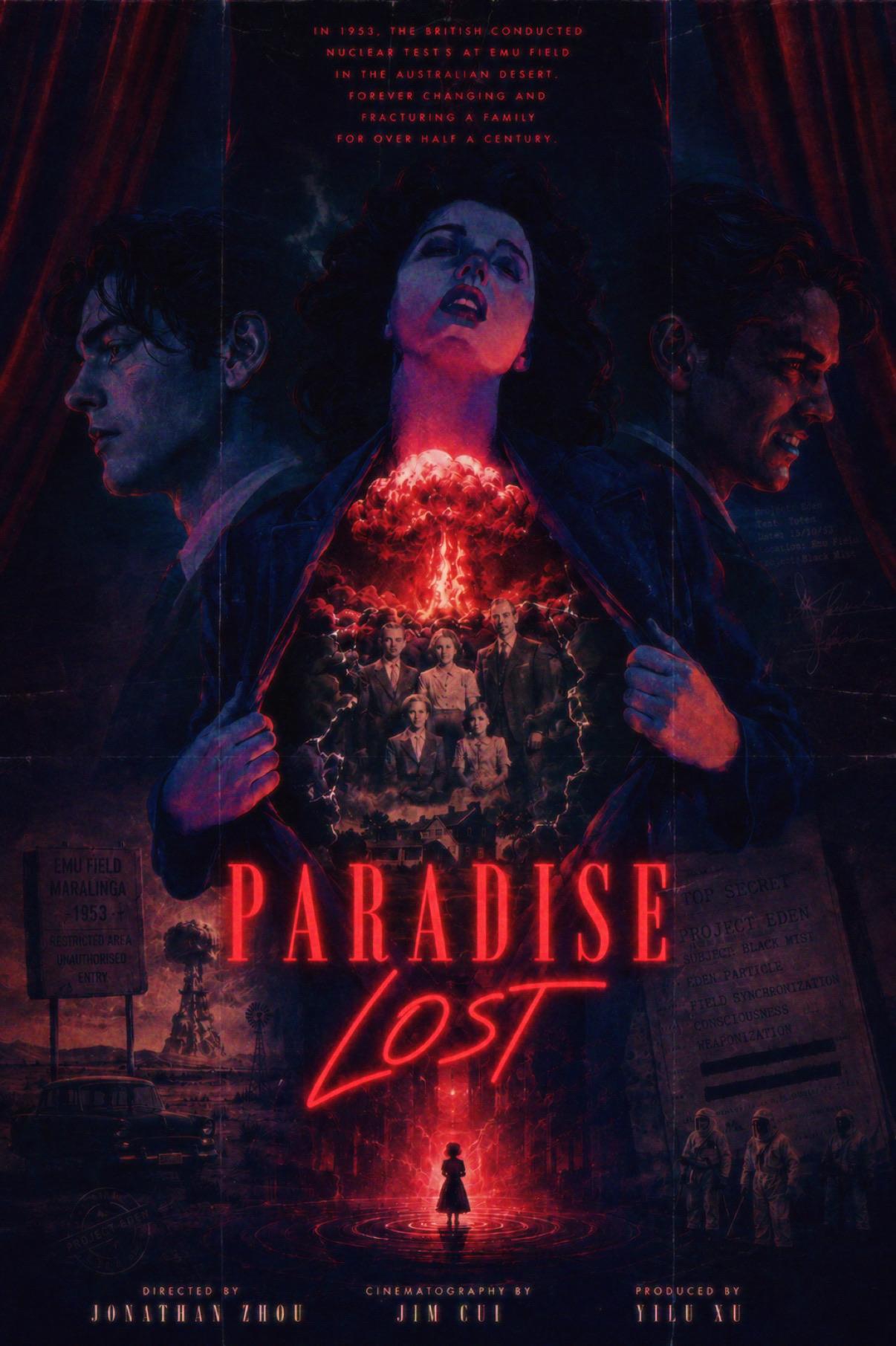
Paradise Lost film poster featuring Elizabeth, Howard, a mushroom cloud and Emu Field

A psychological sci-fi thriller

Paradise
Lost

The Black Mist did not disappear. It learned how to remember.

15 minMystery / ThrillerAustralia
Descend into the field ↓

Logline

Memory has
become a
physical force.

After her scientist father’s mysterious death, Elizabeth traces his final warning to an abandoned family estate—and discovers that the radioactive legacy of Britain’s 1953 nuclear tests has learned how to inhabit human memory.

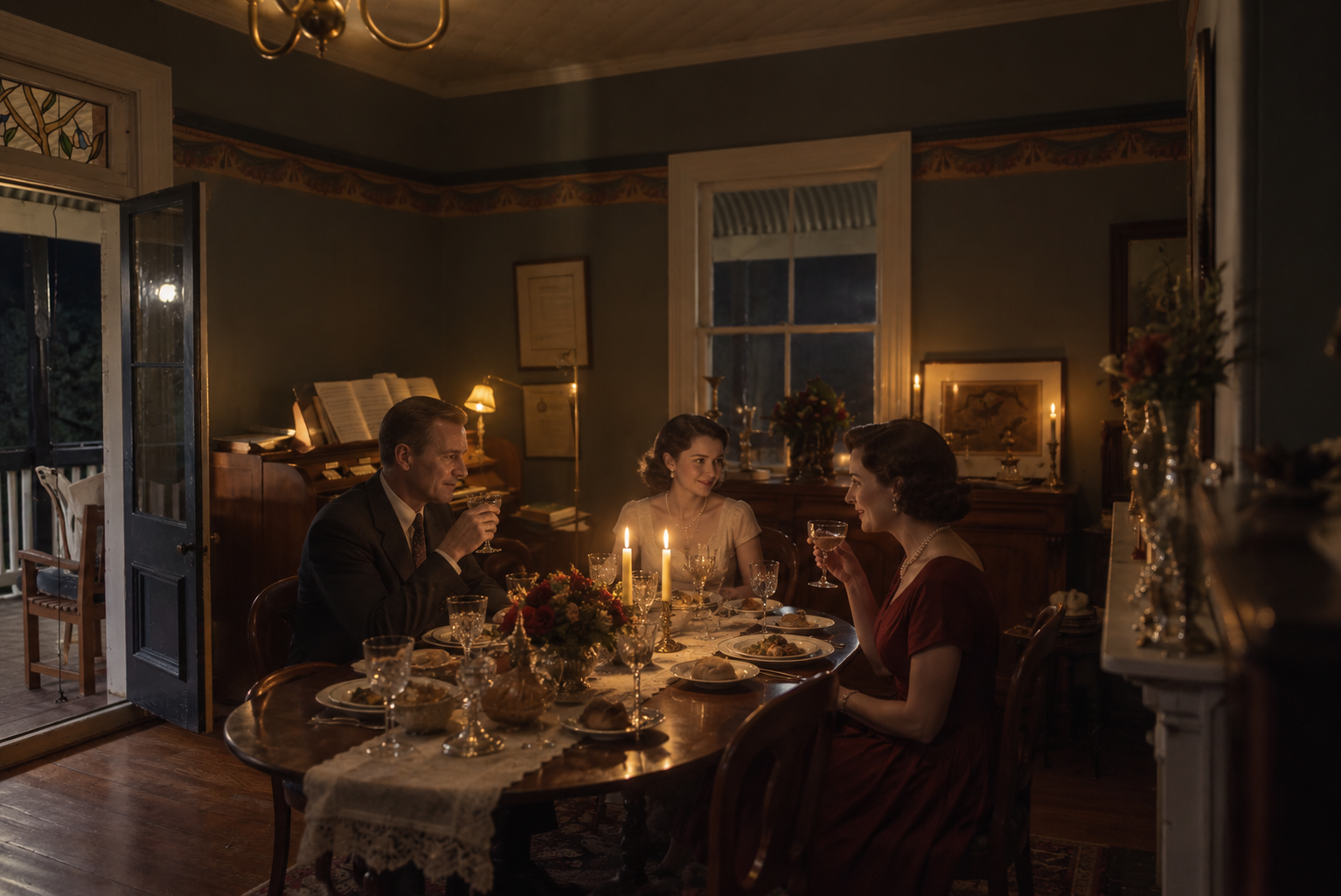
Inside the house, dreams bleed into waking life: a glamorous 1950s garden party, her grandparents at Emu Field, and a childhood dinner poisoned by violence. Each vision is threaded with the same living Black Mist.

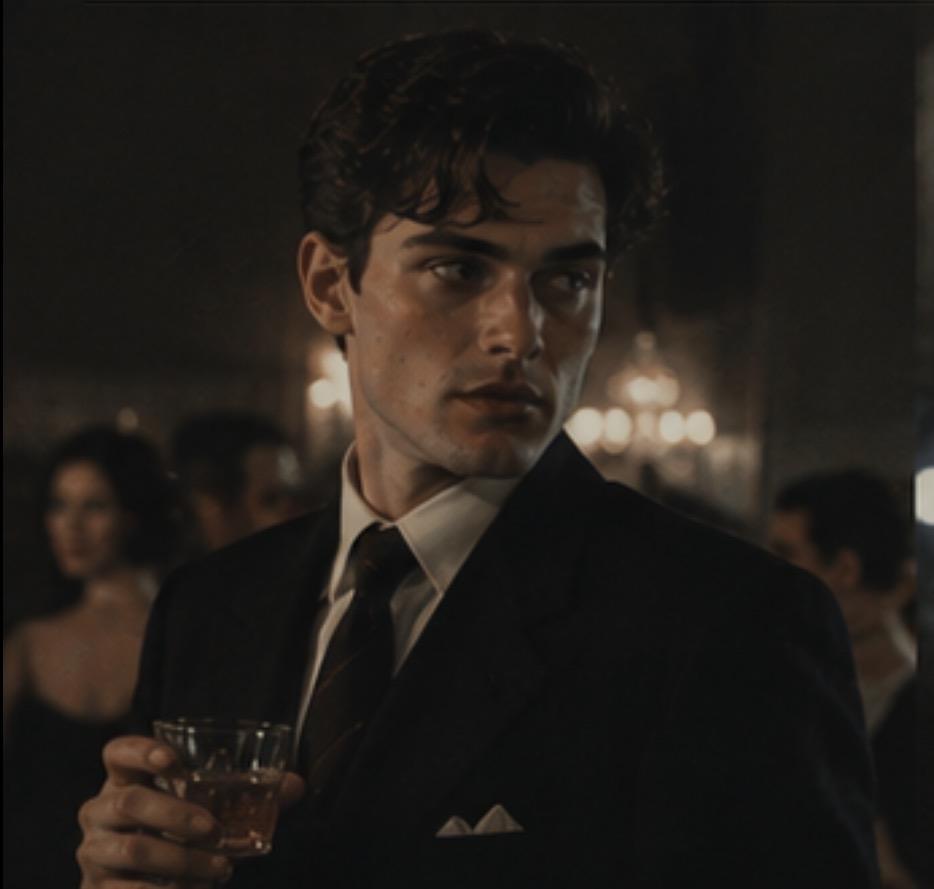
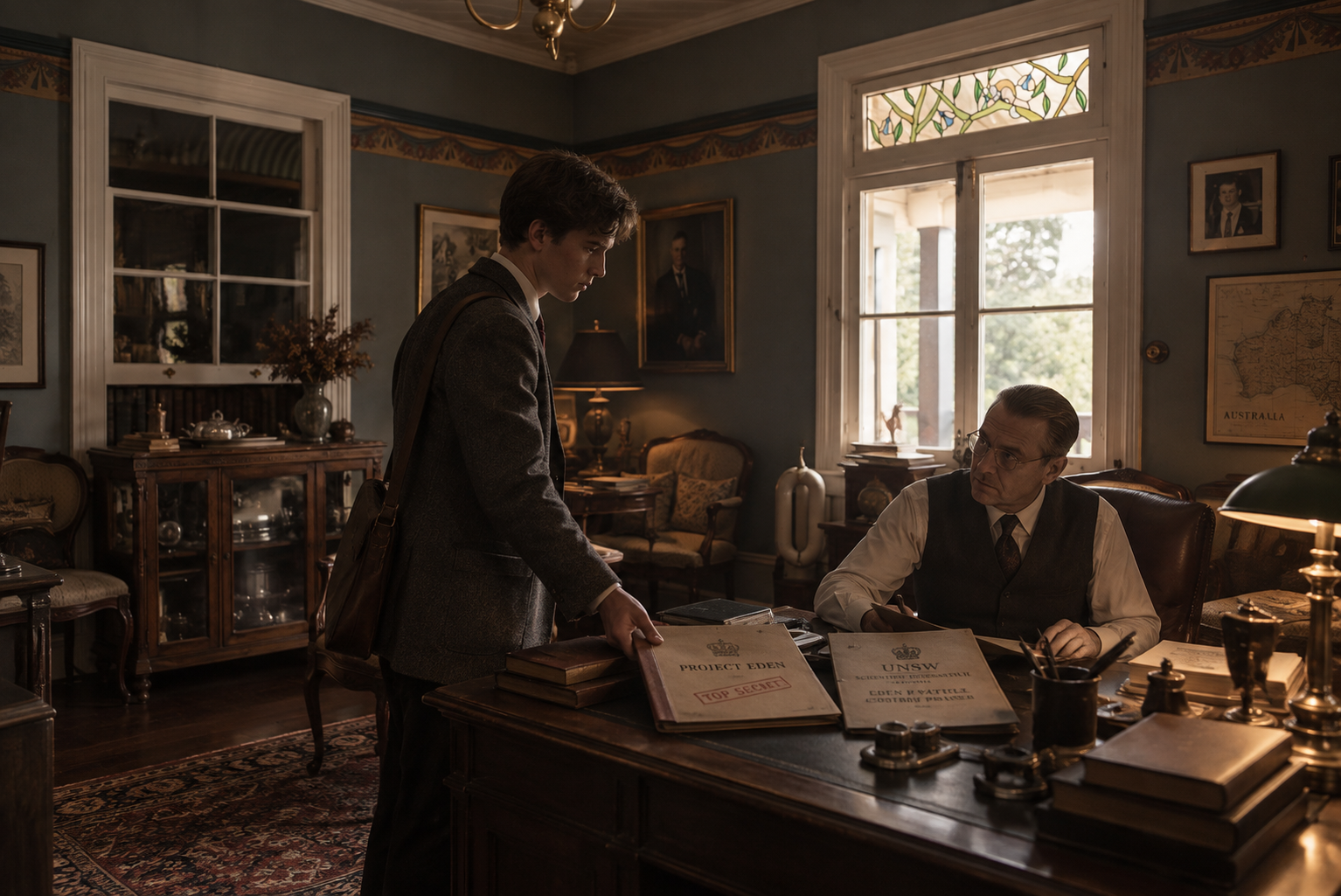
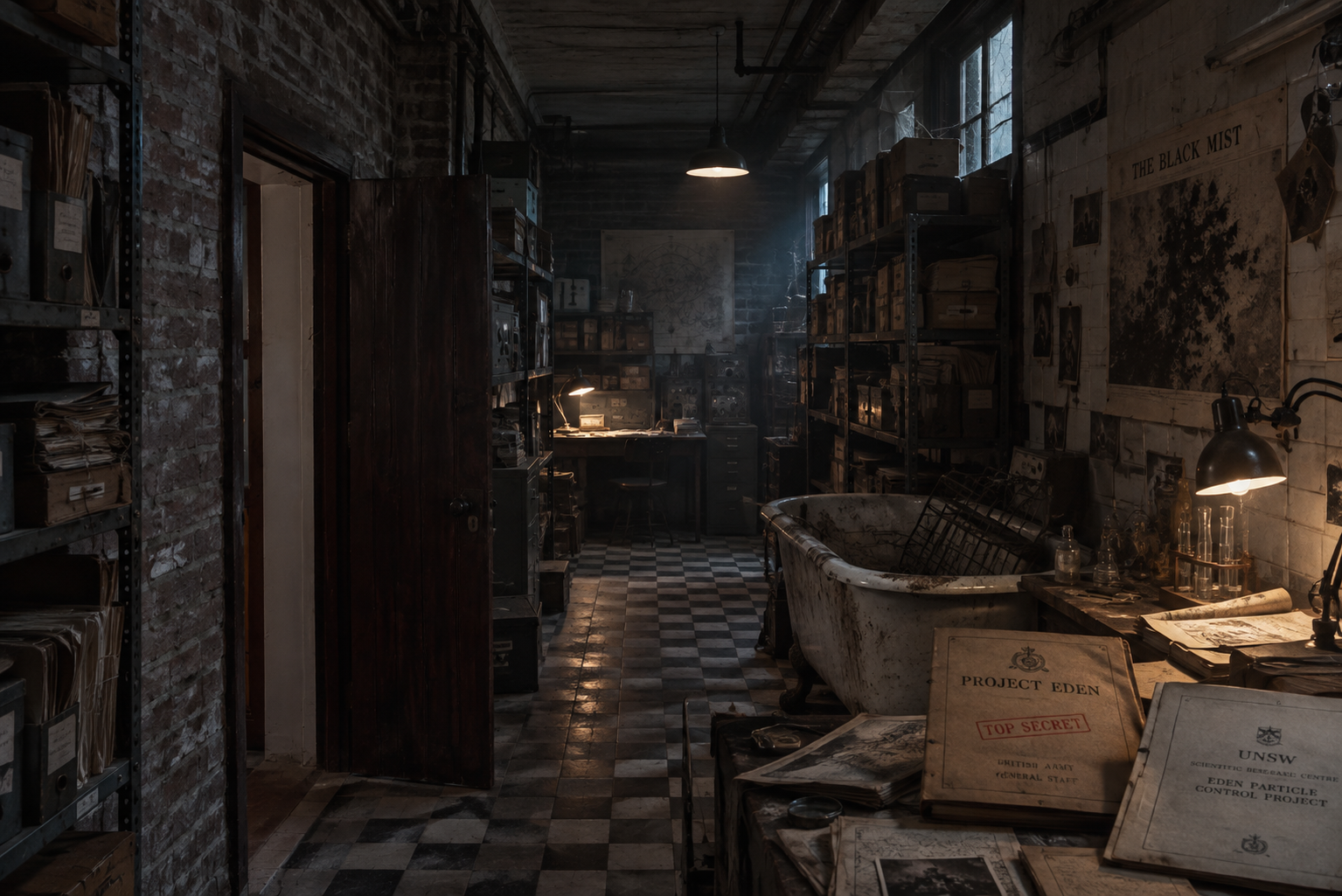
Howard, the warm and attentive stranger who welcomes her, is the one who led her there. In a hidden basement, Elizabeth uncovers Project Eden before Howard forces her into the Field—a shared purgatory built from inherited trauma, where revenge, desire and memory can no longer be separated.
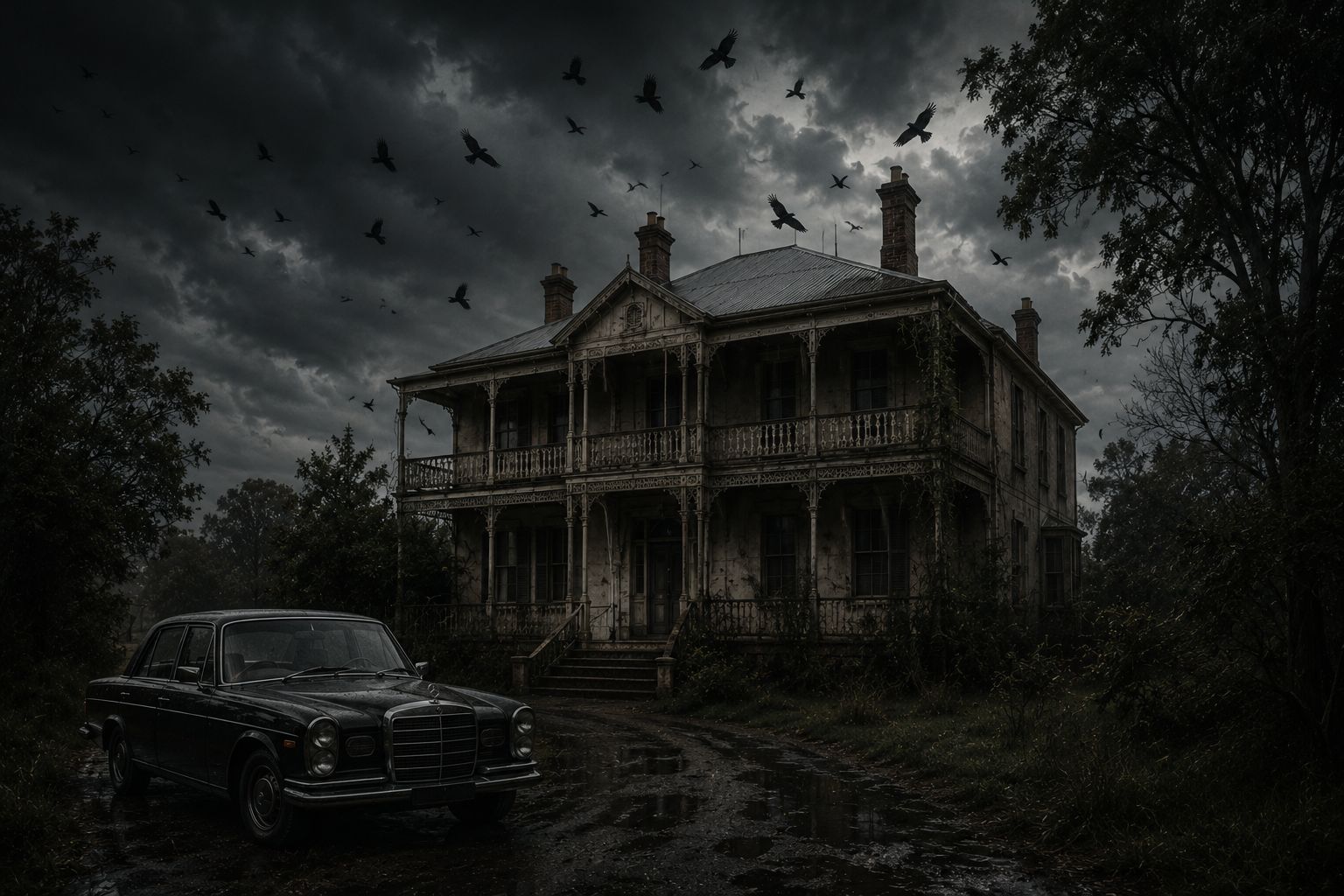
An abandoned Australian estate beneath a stormy sky
The grandfather’s estate — the threshold between reality and the Field.

1953

Operation Totem · Emu Field · South Australia

The day the
desert turned
black.

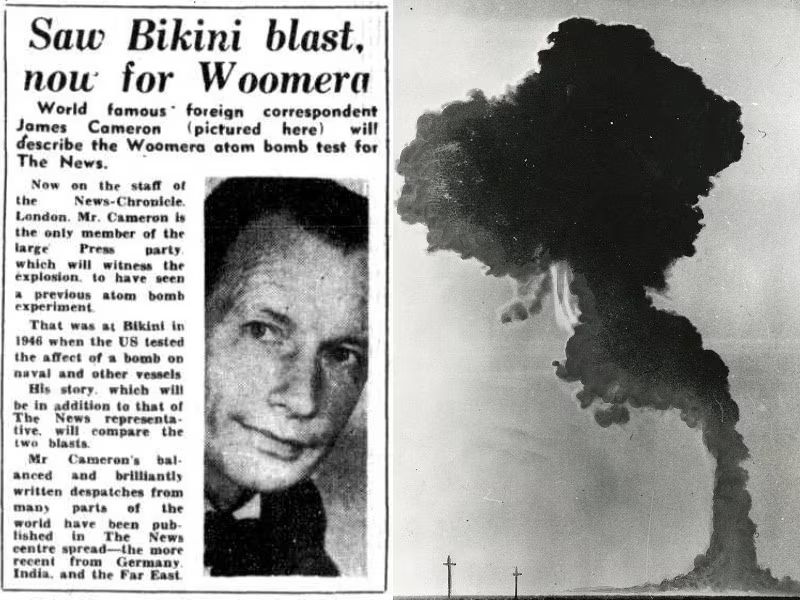
Historic newspaper report and mushroom cloud from British atomic testing
Archive coverage of the Totem 1 atomic test.

On 15 October 1953, Britain detonated the Totem 1 atomic bomb at Emu Field in South Australia.

The test produced a radioactive cloud that became known as the “Black Mist”. Fallout travelled across remote areas, exposing Aboriginal communities with inadequate warning or protection and leaving a legacy of sickness, death, blindness and lasting suffering.

Paradise Lost does not treat history as backdrop. The nuclear legacy is the wound from which the story’s speculative world grows.
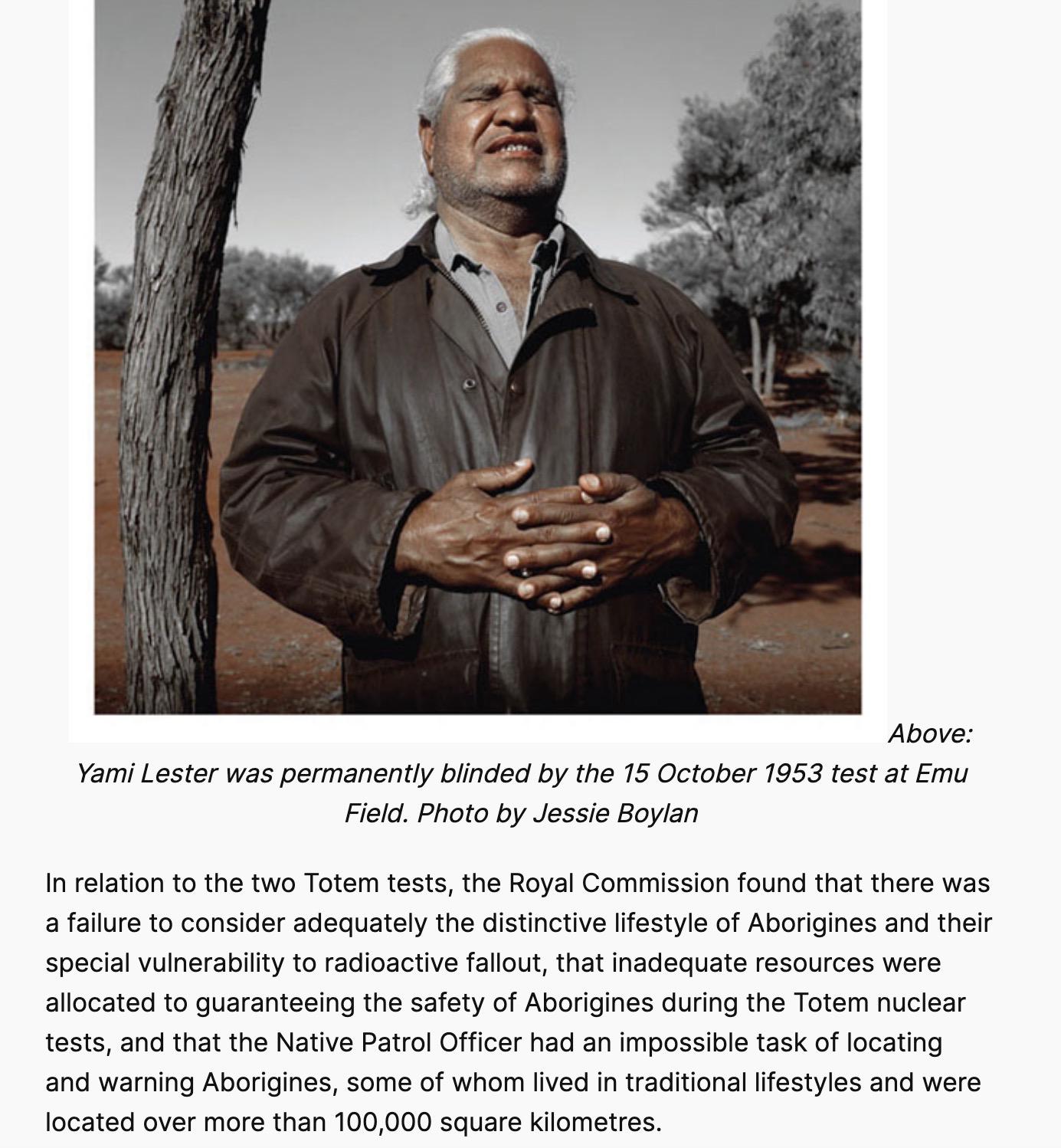
Yami Lester, survivor of the Emu Field test

The devastating human impact

Yami Lester was permanently blinded by the 15 October 1953 test at Emu Field. The Royal Commission later found serious failures to consider the safety and vulnerability of Indigenous people.

Photograph by Jessie Boylan, reproduced in the supplied pitch deck.

Theme & Philosophy

Human harm,
made physical.

Paradise Lost begins with a simple terror: human beings can knowingly inflict suffering on one another—and ask the injured to carry the consequences in silence.

Britain's nuclear testing in Australia turns that moral violence into heat, radiation and fallout. But the film uses this history to enter a more intimate battlefield: the family, where shame, neglect, control and anger can be buried—and passed from one generation to the next.

Australian Gothic · The Uncanny

Home becomes
unhomely.

The old estate should offer belonging, yet every familiar room reveals a secret. Under the hard Australian sun, land and architecture become carriers of memory: the repressed returns through dreams, bodies, the Black Mist and the Field.

RETURN OF THE REPRESSED

What a family or nation refuses to face does not disappear. It repeats.

THE EDEN PARTICLE

Generational trauma becomes a physical law—binding memory to consciousness, bloodline and place.

THE MORAL QUESTION

Can Elizabeth face what was done without making her pain someone else's inheritance?

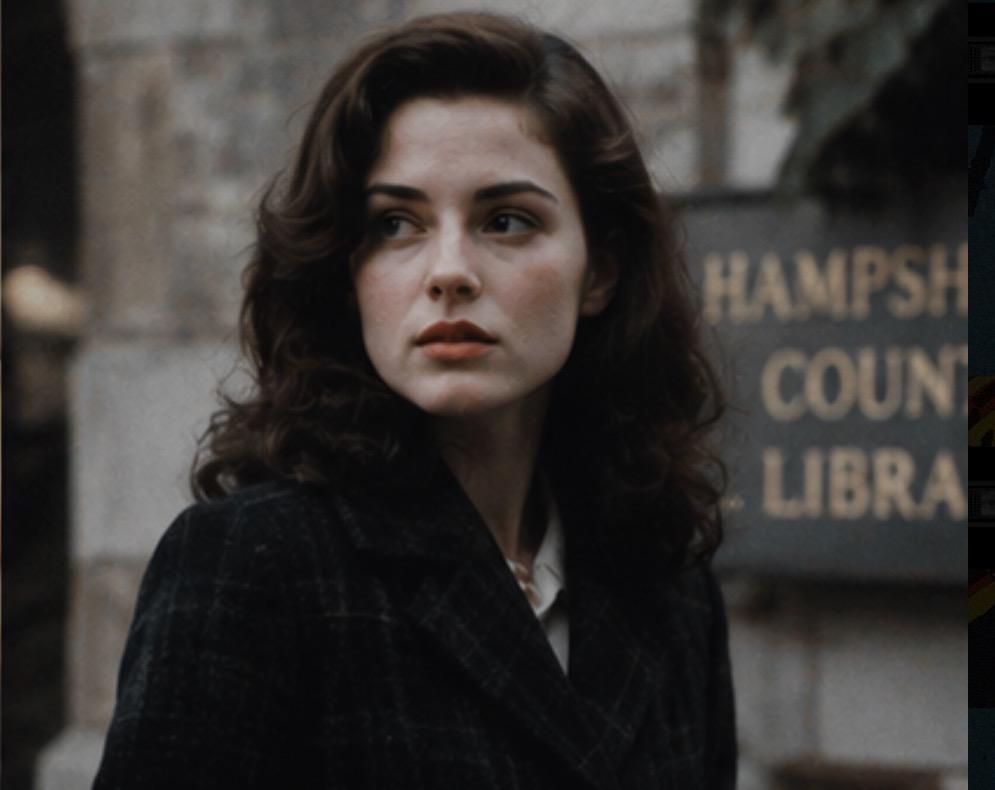
Elizabeth Mary Schmidt

The Seeker

Elizabeth
Mary Schmidt

A philosophy student grieving the apparent suicide of her father, Dr Friedrich Heinrich Schmidt. Intelligent, introspective and emotionally restless.

Goal
Follow her father’s final warning, uncover Project Eden and prove that his death was not a suicide.
Need
Stop accepting the cruel reflection of herself built by childhood trauma—and trust her own mind.
Flaw
Her need to feel seen and understood makes Howard’s effortless warmth almost impossible to resist.
Howard William Christopher the second

The Obsession

Howard William
Christopher II

A psychology graduate and counsellor whose gentleness conceals a carefully engineered revenge.

Goal
Use Elizabeth as the final piece of Project Eden and imprison her family’s legacy inside the Field.
Need
End the cycle that transformed his father and grandfather—without admitting that revenge has transformed him too.
Flaw
He can enter the Field but cannot control it. His buried care for Elizabeth fractures the certainty behind his plan.

Top Secret · Project Eden

The Eden
Protocol.

The Black Mist did not simply carry radiation. It carried a particle capable of binding itself to consciousness. Decades of military and university research transformed that discovery into a machine—and a doorway.

Totem 1Black MistEden ParticleSynchronizationThe Field
01 / ORIGIN

The Black Mist

When Totem 1 detonates at Emu Field on 15 October 1953, its radioactive cloud carries an unknown substance across the desert. The fallout becomes both contamination and carrier.

Source event: Operation Totem
02 / MEDIUM

The Eden Particle

The substance enters memory and attaches itself to consciousness. It does not let go. Trauma becomes transmissible data: preserved, repeated and inherited across generations.

Property: mnemonic adhesion
03 / INTERFACE

Synchronization

Project Eden isolates the particle. Elizabeth’s grandfather begins the military research; her father later develops a control machine able to synchronize a living mind with the particle’s accumulated memory.

Interface: EEG-like neural apparatus
04 / ENVIRONMENT

The Field / Purgatory

A shared consciousness-space assembled from people, places and trauma. Memory behaves like matter, the dead can reappear, and belief can rewrite the rules. Howard reopens the Field—and makes it stronger.

Exit condition: trust your own mind
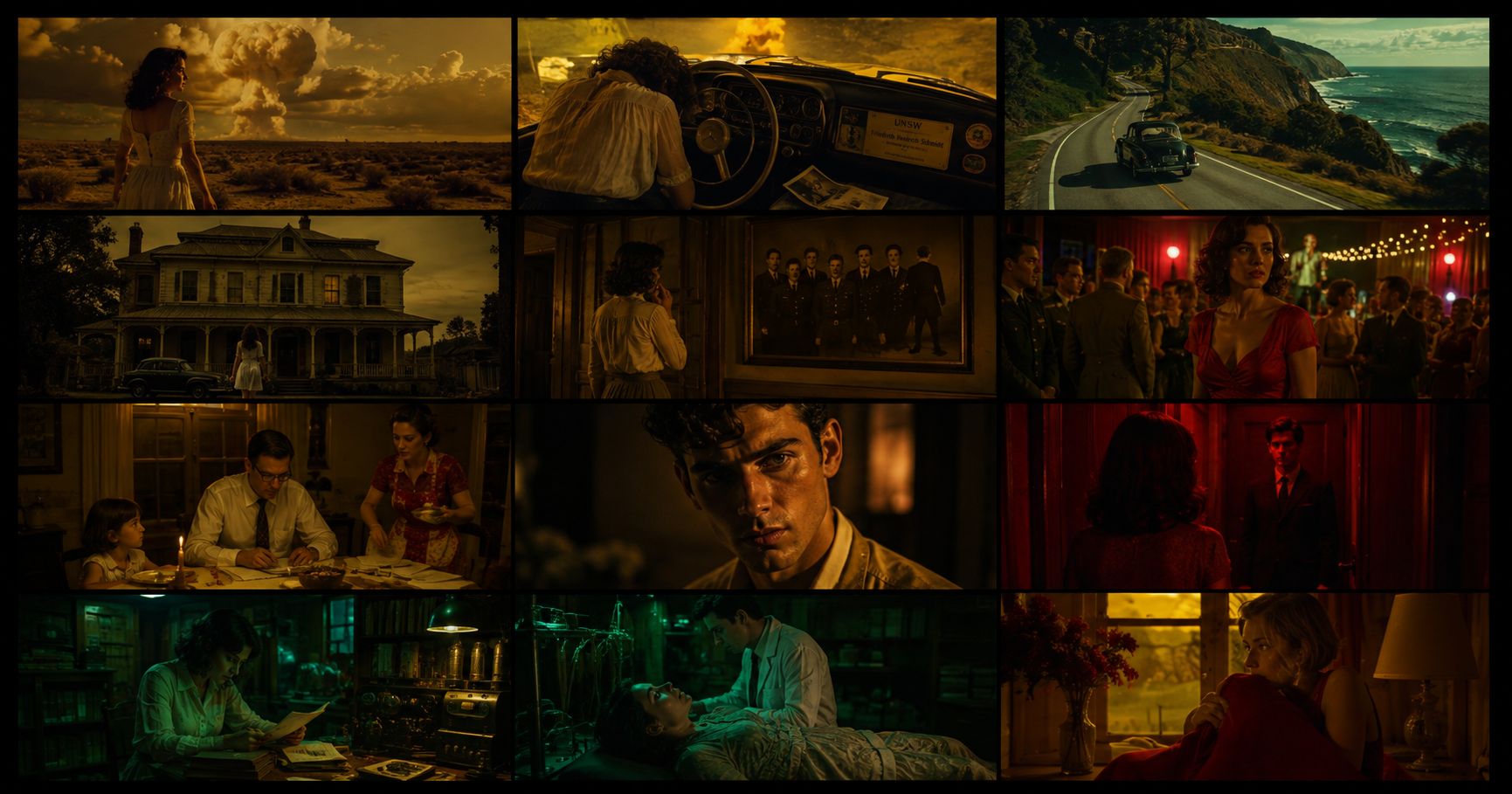
Paradise Lost visual style board in yellow, green and red tones

Film noir × retro detective × Lynchian surrealism

1950s
Americana
in a fever.

Bold primary colours, deep shadows and distressed vintage textures create a dreamlike world where memory, trauma and desire collide.

  • Kieślowski — formalist visual language
  • David Lynch — dreamlike mystery
  • Roman Polanski — precise staging and classical suspense
06 / Art Concepts

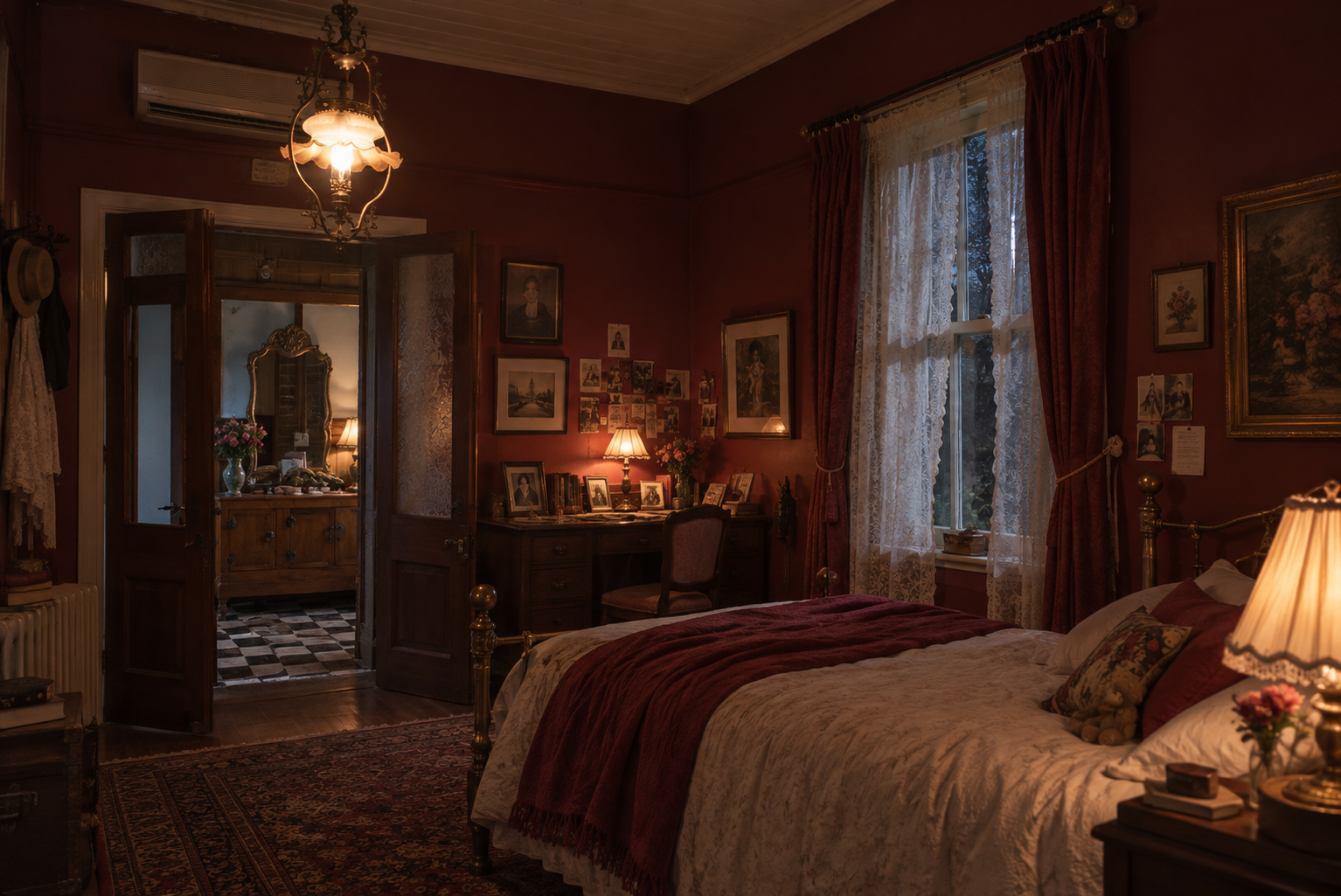
The Grandfather's Estate · Selected Location

A house built to
preserve a lie.

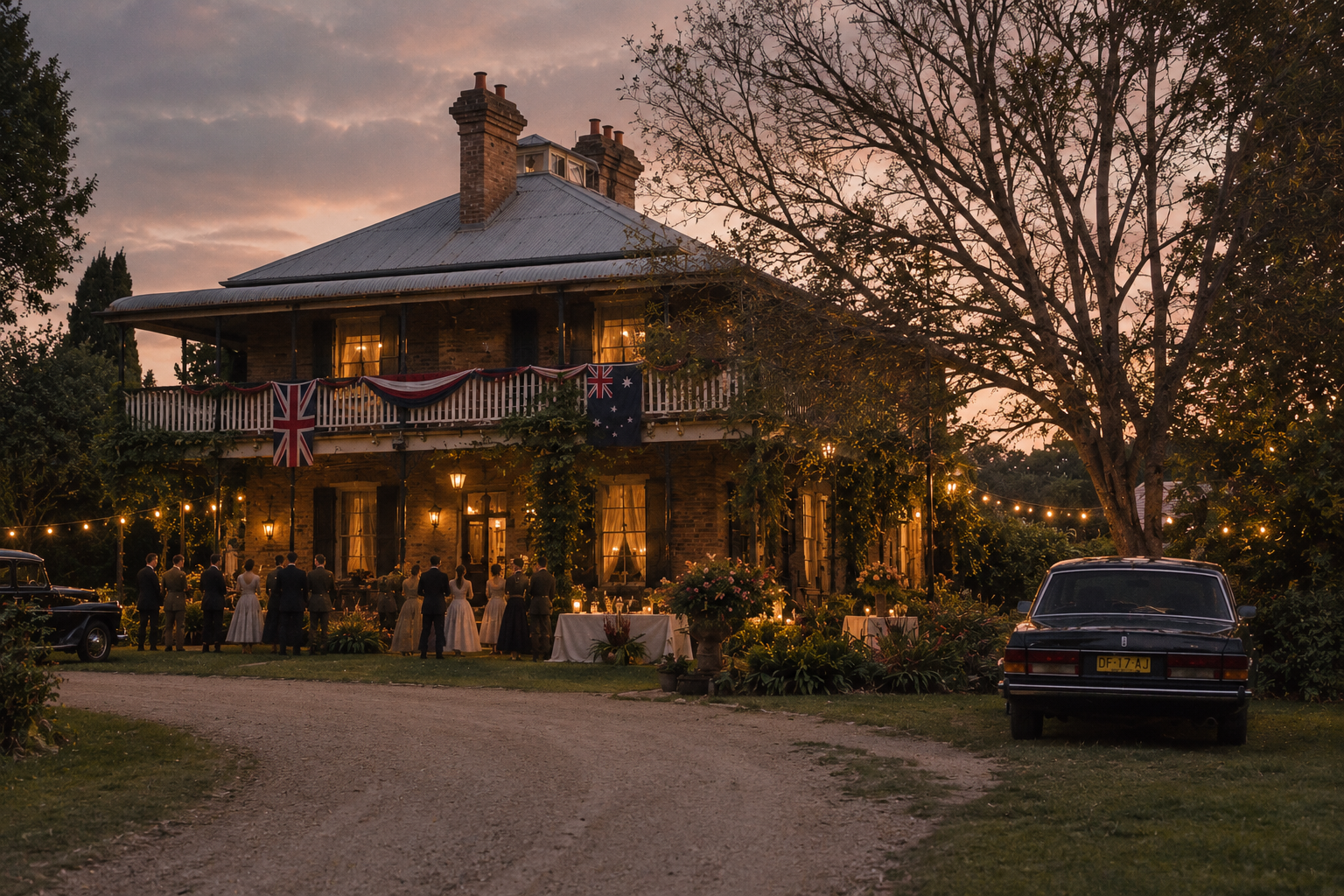
A warm, respectable Australian home on the surface; beneath it, the architecture of Project Eden. Each room moves from family nostalgia into surveillance, secrecy and inherited trauma.

The selected grandfather's estate at dusk during a 1950s garden party
Exterior & garden party · The grandfather's estate · Selected location
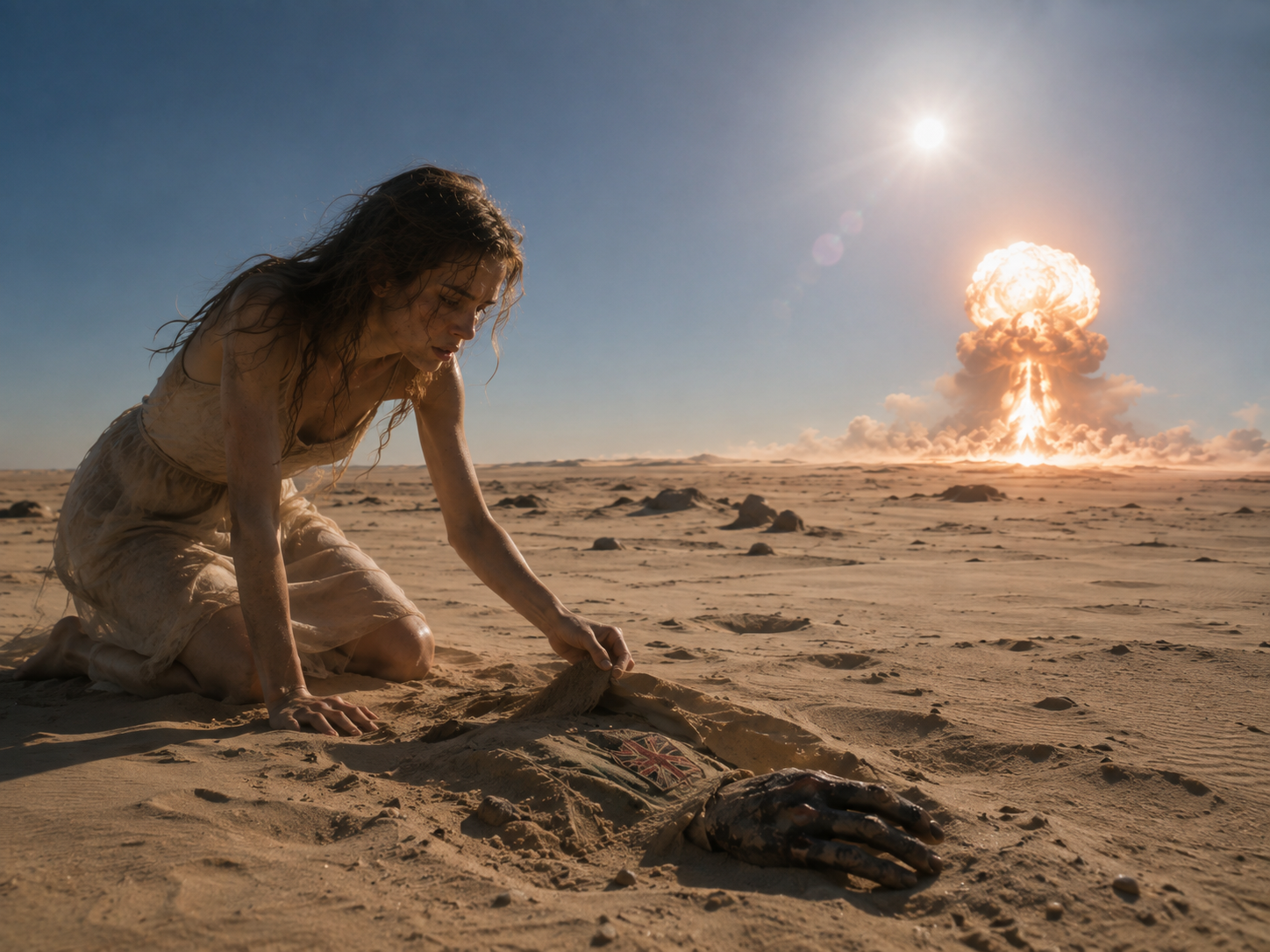
Elizabeth kneels in the desert as a nuclear explosion rises behind her in a dream
Dream Sequence · Emu Field, 1953

The fallout
remembers.

Elizabeth wakes beneath a white desert sun. A uniform and a charred hand emerge from the sand. On the horizon, the nuclear cloud blooms again—not as history, but as inherited memory made physical.

Bleached daylightBuried evidenceLiving memory

Behind the film

Poetic surrealism.
Classical precision.

Cinematography by

Jim Cui

Produced by

Yilu Xu

Film references

The Double Life of Véronique (1991) · Twin Peaks: Fire Walk with Me (1992) · The Ninth Gate (1999)

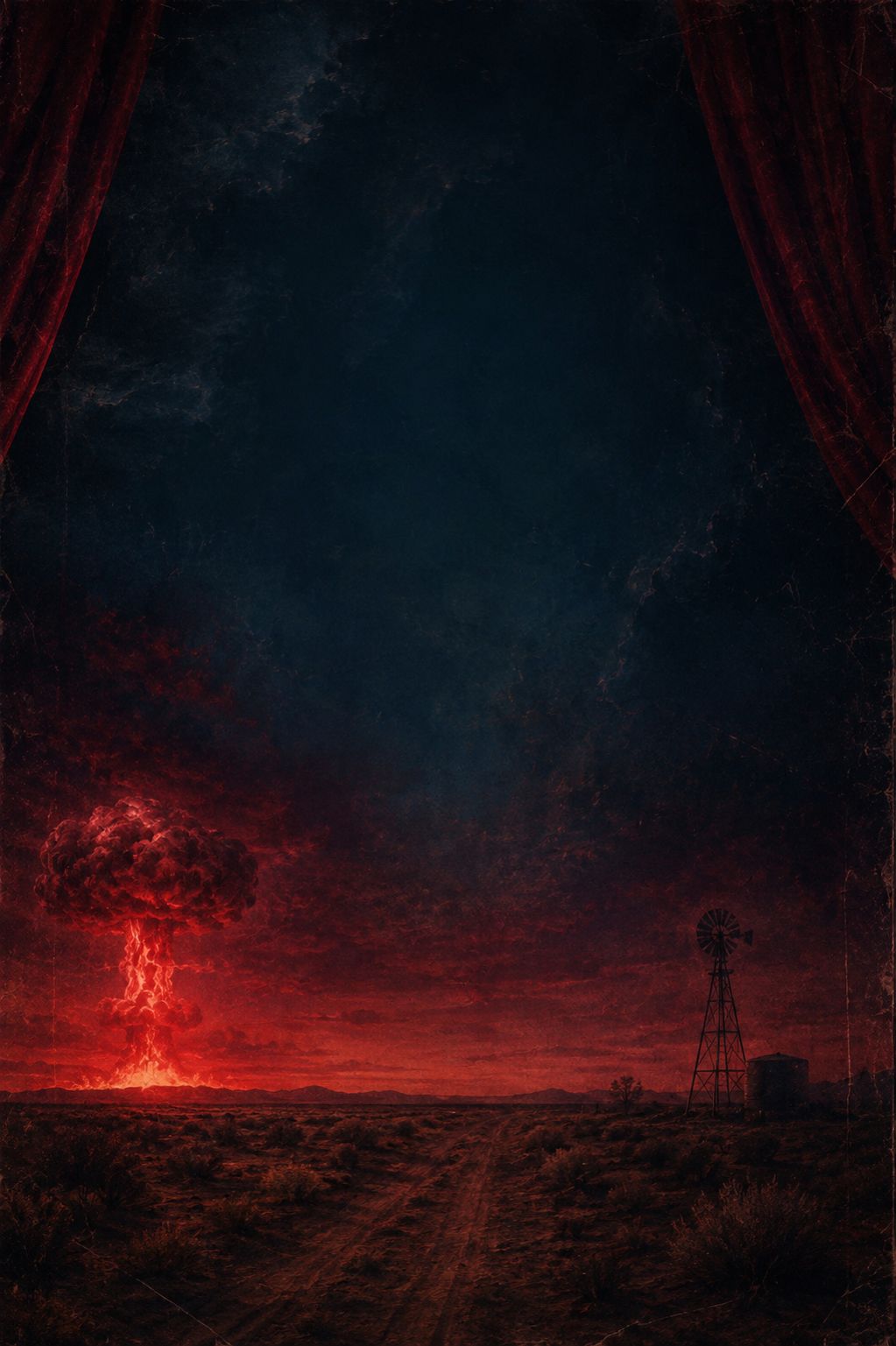
A red nuclear cloud over the Australian desert

Project enquiries · Screenings · Festivals

The past is
still alive.

jiayangzhou135@gmail.com ↗

Paradise Lost